
Nearly half of America’s billion-dollar startups were founded by people born outside the US. Sidedoors documents them one by one, and what makes each of them great.
This profile is built from Karol’s lectures and interviews, what his co-founders and investors have said on the record, and Pi’s own research papers. It will tell you:
Why four of robotics’ biggest names, from Berkeley, Stanford and Google, bet their careers on a company with no product, no revenue and no rush to get either
Why Karol pointed his team at folding laundry, a task they called “impossible,” and how Pi landed its first paying customer in 18 months. He had guessed it would take five years.
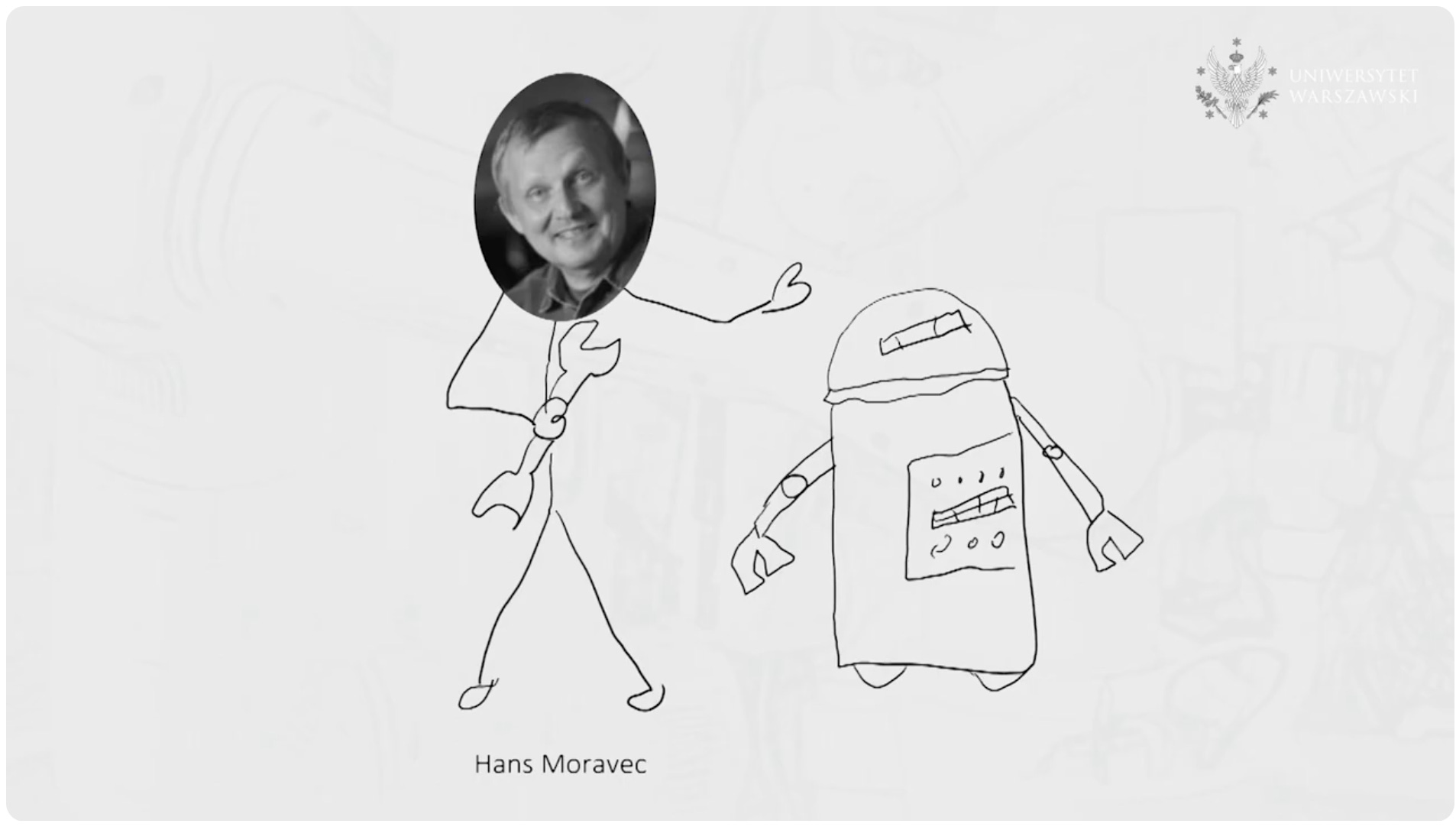
In 2021, Karol Hausman gave a lecture wittily titled Disordered Thoughts of Machines. Back then, he still had a bit of time on his hands: he led a robotics team at Google Brain and was not yet a father or a founder. The invitation came from the University of Warsaw, where the Polish-born engineer had once studied philosophy. Would he give the lecture that opens the Polish academic year?
Smiling, Karol agreed, and set out to make the case for chaos.
His lecture starts with “the philosopher Socrates,” who walked around Athens asking experts to define their own fields, and showed every single one of them that they couldn’t. Then he tells the story of the first AI researchers, who tried to hand-write the rules of intelligence the same way Euthyphro, Athens’ religious prophet, tried to define piety to Socrates: fact by fact, rule by rule. It didn’t work, and the researchers got an AI winter for their trouble. Intelligence, he tells the audience, can’t simply be written down and handed over.
“Intelligence is learned by experiencing the mess and chaos of the real world.” Karol Hausman
Two years later, Karol followed his own advice. He left Google Brain to start his company: a big bet, a leap of faith, a dive into chaos (in the philosophical sense of the word).
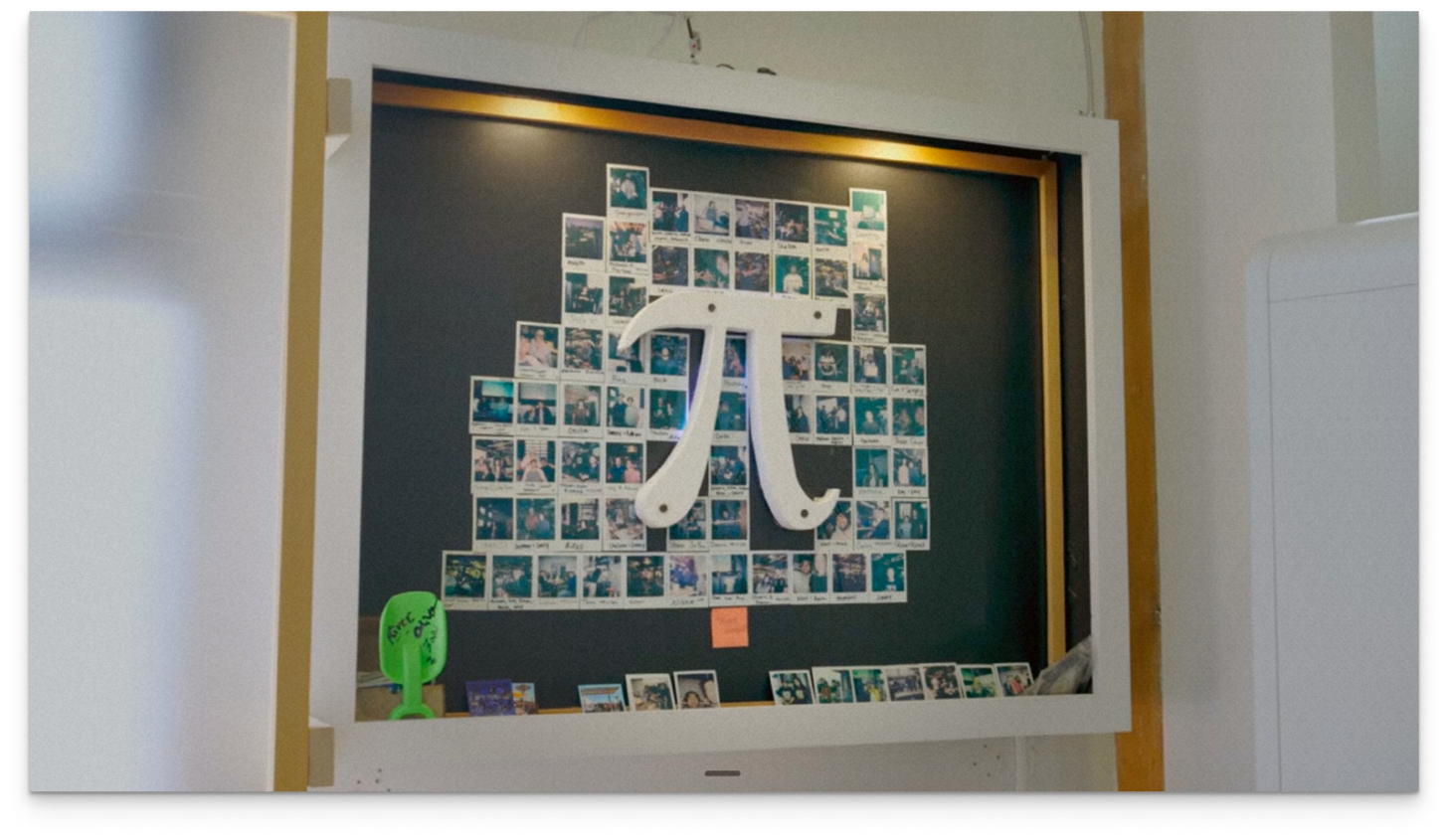
The company is called Physical Intelligence, or π, or Pi. Its grand vision: build a single brain that can control any robot to do any task. Over the past few years, OpenAI has taught machines to work with words. Physical Intelligence wants to teach them to work with their hands and bodies: fold, cook, pack, build… work. If Pi succeeds, labor will come at the flip of a switch, like electricity.
Since March 2024, Karol has raised over two billion dollars for his chaotic curiosity, from an all-star roster that includes Jeff Bezos, OpenAI, Thrive, Alphabet and Sequoia. Just last month, an organizer of a Silicon Valley founders’ dinner summed up the mood around Karol and his company:
“Honestly, it felt like the moment we hosted Dario Amodei in 2022. Something big is happening, we all believe it is almost here, and it is not yet consensus.”
It isn’t consensus, and much of the robotics field is betting on other approaches. When Karol thinks about what could kill the company, the first thing he names isn’t a rival. “We think our greatest competition is science itself.”
Physical Intelligence, quickly
The company: Physical Intelligence came out of stealth in March 2024 with one indecently large objective: build a single model that can control any robot to do any task. The company calls itself π. Its website is pi.website. pi.com is for sale but, in Karol’s words, “super super expensive. We would rather spend that money on compute.”
The seven co-founders: Karol Hausman (CEO), Sergey Levine (UC Berkeley professor), Chelsea Finn (Stanford professor), Brian Ichter and Quan Vuong (both from Google), Adnan Esmail (formerly SVP of engineering at Anduril) and Lachy Groom (early Stripe employee, then an angel investor in Figma, Notion and Ramp).
The bet: Pi trains a single model on data from many different machines (one arm, two arms, wheels, whatever partners send over), on the theory that a generalist beats specialists, the way large language models ended up beating years of specialized translation software.
Today: Pi has roughly one hundred employees. It has no disclosed revenue and, by design, no commercialization timeline. First deployments: folding laundry in rental homes and folding cardboard boxes at Dandelion Chocolate, a San Francisco chocolate maker. Robot makers such as Weave (laundry) and Ultra (warehouse packing) already run their machines on Pi’s models. Pi still describes itself as research-first.
The believers: Pi first announced a $70 million seed round in March 2024 led by Thrive Capital, and joined by Khosla, Lux, Sequoia, OpenAI, and Greenoaks. Eight months later (November 2024), Pi raised another round at a $2.4B valuation, led by Thrive and with participation from Jeff Bezos and Bond Capital. Alphabet's CapitalG led the company's $600M round one year later, and Index Ventures (Nina Achadjian) joined the cap table. And earlier this year, Physical Intelligence raised their latest round at an $11.5 billion valuation led by Situational Awareness and Lux, in which Founders Fund, Thrive Capital, Kleiner Perkins, Accel and Iconiq also participated.
Pi vs the competition: Skild (Pittsburgh, founded in 2023 by Carnegie Mellon professors Deepak Pathak and Abhinav Gupta) is chasing the same goal, one brain for all robots, from the opposite end: sell first, learn from the deployments. It already sells to security, warehouse and manufacturing customers, has booked about $30M in revenue, and was valued at $14B in January 2026. Meanwhile, Tesla, Figure and 1X are betting on the perfect humanoid body. Karol’s position on all of it: “The biggest bottleneck to the entire field of robotics is intelligence. It has always been intelligence.”
1.
Karol Hausman is a LeBron James fan.
This may be surprising for a European, until you remember his years in Los Angeles as a PhD student at the University of Southern California. The love goes back further than that, to Poland, where he grew up watching his local team, AZS Koszalin. When a Koszalin news site asked him in 2016 why he’d moved to the US, one of his answers was a childhood dream: to see an NBA game live.
In the summer of 2010, LeBron left Cleveland to play in Miami with two stars good enough to lead teams of their own: Dwyane Wade and Chris Bosh. That was the NBA’s first modern super-team. They went to four straight Finals and won two.
Founding Physical Intelligence was robotics’ version of that summer. Here’s the starting lineup:
Sergey Levine. A UC Berkeley professor and one of the most cited researchers in history. At Google, he ran the “arm farm”.
Chelsea Finn. Sergey’s PhD student at Berkeley, she invented MAML, one of the best-known methods for teaching a model a new task from a handful of examples. Her thesis won the ACM Doctoral Dissertation Award, the top prize for a PhD in computer science.
Brian Ichter. Karol’s teammate at Google, where they worked on the projects that first plugged language models into robots (SayCan, RT-2).
Quan Vuong. Another Google teammate, and with Karol and Brian, one of the people behind RT-X, which pooled more than a million recordings of 22 different kinds of robots into what Google called “the most comprehensive robotics dataset of its kind.”
Adnan Esmail, who had shipped hardware at scale at Tesla, then as senior vice president of engineering at Anduril.
Lachy Groom, the wildcard from Australia, who had never worked in a research lab.
Karol started Pi with six co-founders, most of whom had spent the previous decade citing, co-authoring, advising and occasionally out-publishing each other. Getting one star researcher to leave a safe job is hard. Getting five of them to bet their careers on the same company, and agree on who runs it, is in a league of its own.
If LeBron joining Wade and Bosh made Miami a super-team, Pi was closer to the Dream Team: Jordan, Magic and Bird teaming up on a franchise they had started themselves.
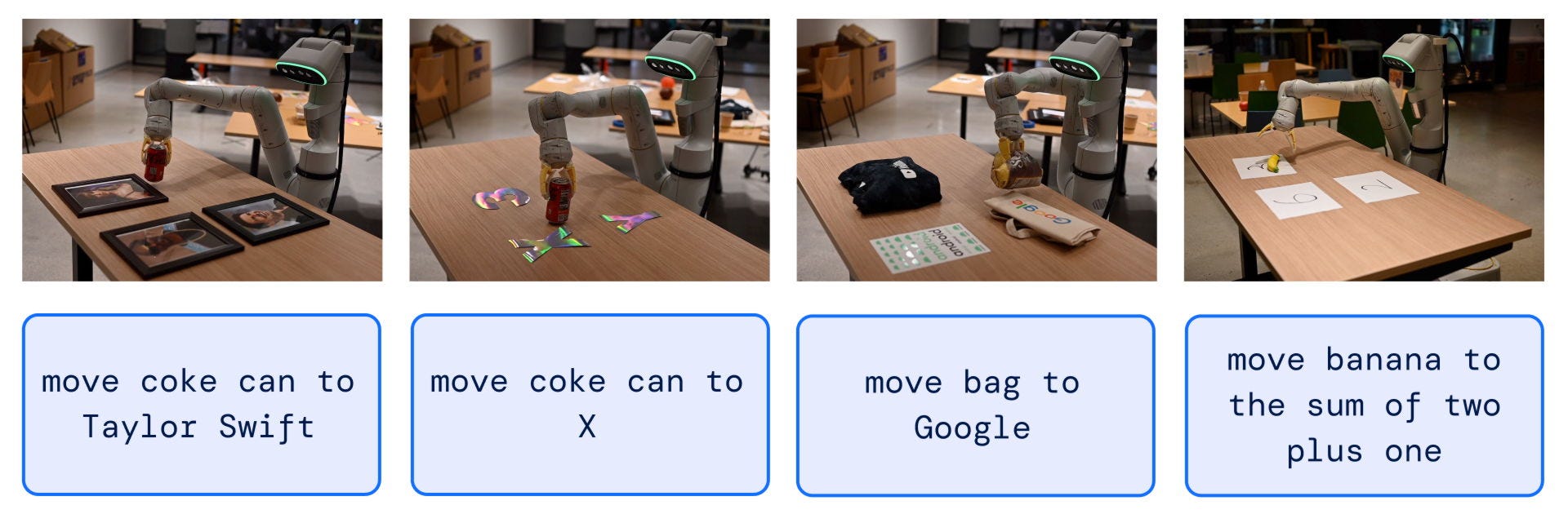
What made our Magnificent Seven all take the leap into chaos in 2024? According to Karol, it was the science. In 2022 and 2023, working at Google with Brian and others, Karol watched language models and robots start to connect. The two still recall, with fondness, awe and a little adorable self-deprecation, how a one-armed robot moved a Coke can onto a photo of Taylor Swift. “That was one of those moments where it was like, holy shit this is going to work,” Karol remembers.
For fifteen years, nothing in robotics had really added up. Robots had to learn everything from their own experience: one lab, one robot and one task at a time. Progress in one place rarely helped anywhere else. It felt, Karol says, like “they’re not adding up to each other.” The Coke-can robot had never seen Taylor Swift, but the internet had. If robots could borrow what the internet already knew, they wouldn’t have to learn the whole world from scratch. Now there was, in his words, a light at the end of the tunnel. “Once you see that light, you can’t unsee it.”
Once Karol saw that light, he decided the problem couldn’t be solved as “priority number 20 in another organization.” It needed its own company, built like OpenAI: a lot of capital, a top team, one focus and real urgency.
He had the top team. Like any super-team, Pi also needed a patient owner: an investor happy to wait, who would let the company start as a research lab with no pressure to make money early. He found Josh Kushner and Philip Clark at Thrive, who led the $70 million seed in March 2024 and came back eight months later for a $400 million round at a $2.4 billion valuation. Today, Karol says he made the right bet.


Every super-team also needs a front office, someone to run everything besides the research. That job fell to the wildcard of the lineup, Lachy Groom. He’d sold his first company at thirteen and joined Stripe straight out of high school, as one of its early employees. Over the next few years, Lachy led Stripe’s launches in Singapore, Hong Kong and New Zealand. Then he went out on his own and became one of Silicon Valley's best-known angel investors, with early checks in Figma, Notion and Ramp.
On paper, he was an unlikely match for a room of robotics professors. But like any good angel investor, Lachy had seen it coming. He’d been reading papers out of their labs for years, and telling friends that if Chelsea, Sergey or Karol ever started a company, they should connect him. That happened. The researchers pitched him as an investor, and by the end of the pitch he wanted to join. "It was just one of those meetings where you walk out and it's like, This is it," Lachy told TechCrunch.
Karol says Lachy understood the research-first idea within the first minute. Most investors before him had heard a research project and tried to make it smaller and faster: pick a market, find revenue, ship something.
Karol had watched that road swallow robotics companies before. They begin with a broad vision, dive into the market with the biggest TAM, cut corners for that one customer, and very quickly end up, in his words, as "an application company, like a warehouse pick and place company." For him, Karol says, that would be "heartbreaking."
He had always been the one arguing for the biggest version of the idea. Lachy was the first to argue for an even bigger one.
In early 2024, the team was lined up.
2.
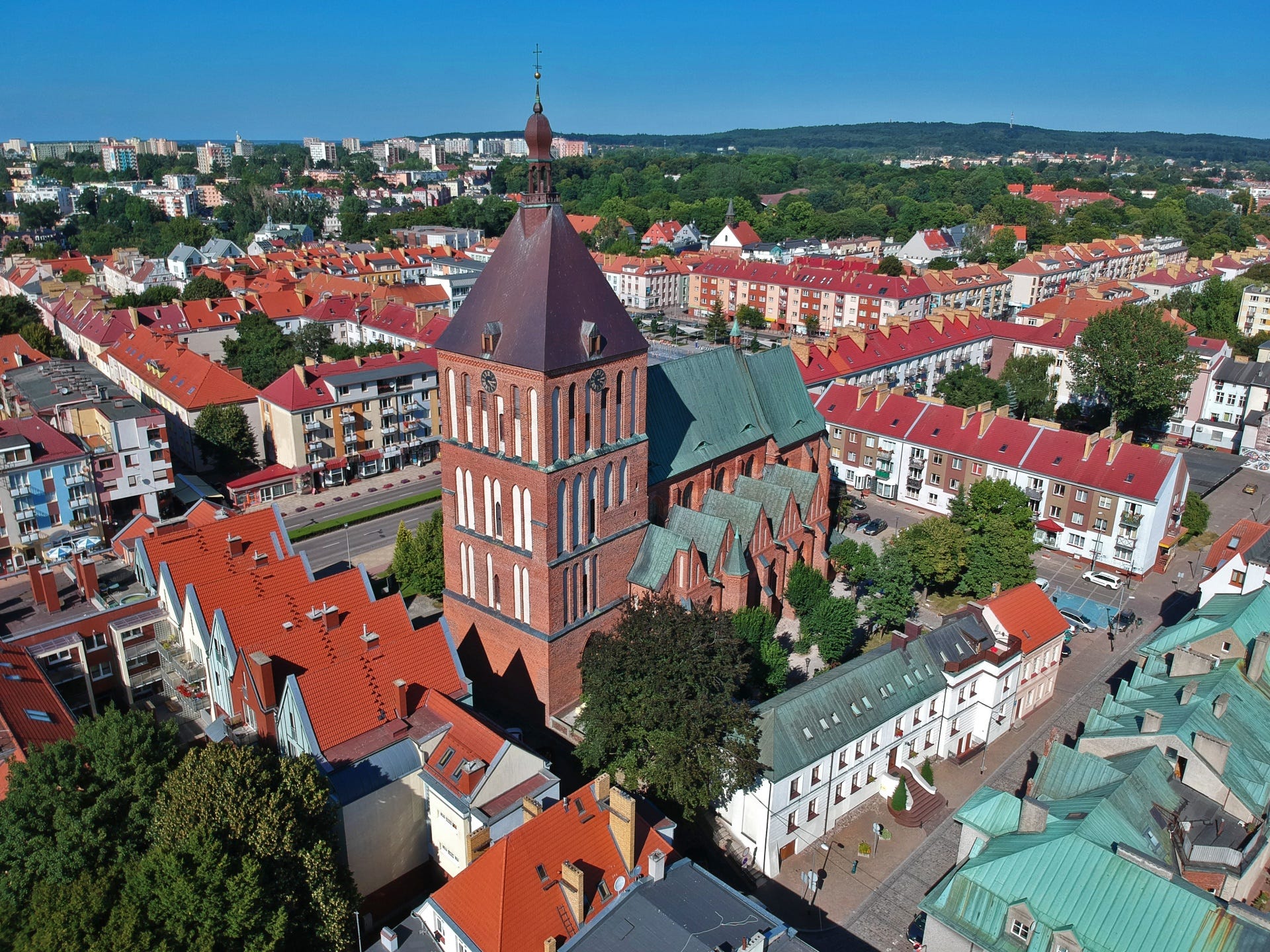
Karol is from Koszalin, a city of about 100,000 people near Poland's Baltic coast, where his father was a mechanic and his mother ran her own business. He grew up fast, helping to support the family from a young age. His escape was competitions (math, physics, and chemistry), and Star Wars: the books, the films, again and again. What stayed with him were the robots: so many kinds, with different bodies and different jobs, good ones and bad ones, all living next to people. If you could build something that human-like, he thought, "it would allow us to understand ourselves a little bit better."
He would chase that idea for about fifteen years, across three countries and four universities, perfectly happy even though for a long time it "felt like it's not really possible to do."
In high school, he wanted to be an astrophysicist. He applied to physics and math programs for university, but when his friends chose engineering in Warsaw, he followed them. They were smart, and he wanted to stay with them. He didn’t worry much about the right template for a career. He trusted his friends to point him somewhere good, which they did.
At the Warsaw University of Technology he studied mechatronics and finished first in his class. On the side, he spent a year studying philosophy at the University of Warsaw, and finished first there too.
Philosophy taught him that even the great names “made many, many mistakes along the way,” and were sure the world worked a certain way “when it’s now very clear that it doesn’t.” As we’ll come to learn, Karol is very comfortable with being wrong.
His favorite class was ontology, the study of being: what exists, and what things really are. Logic, the other class he remembers, had been easy. He already knew the math, and every rule made sense. Ontology was something else. Every philosopher used the same words differently, nothing fit together, and he had no idea what was happening from one class to the next. He loved it. You just “sit and contemplate reality,” he says, even when nobody can tell you what is right and what isn’t. It was the class where he had the most fun, and where he felt “much closer to the truth” than in any other.
Robotics, meanwhile, was a letdown. At the time, the dream job for a Warsaw robotics student was on the production line of the Avon cosmetics factory outside the city. Karol went to see it once. “It was the most uninspiring thing I’ve ever seen.” What bothered him was that nobody seemed to be working on robots that could actually think.
So he went to Germany for his master's, on a scholarship to study Robotics, Cognition, Intelligence at the Technical University of Munich (TUM). On his first day, the metro got stuck and he missed his very first class, so he roamed the corridors looking for something to do. As if guided by a higher power, he stumbled on two big white doors with a mechanical sound coming from behind them. "I don't know why, but I just decided to open them."
We'll call it a cosmic intervention. Inside, two human-size robots were at work. One was making popcorn. The other was spreading butter on toast. (The lab's two robots were called Rosie and James. Around that time, a video of them making popcorn and sandwiches made the news.)
After years of searching, Karol had found hope for physical intelligence. He frantically knocked on the office next door and asked for a job. He did not know the standard robotics software. He did not know Linux. He barely knew how to program. But Dejan Pangercic and Professor Michael Beetz, who led the group, were presumably charmed by his enthusiasm, or impressed by his pedigree and intelligence. They told him to come in on Monday, and he spent the next year and a half as a research assistant in their group. Karol still counts each of them as "yet another person that I'm really grateful to."
After Munich came America. Karol picked the University of Southern California for his PhD: for its robotics group, for his professor, Gaurav Sukhatme, and, in his own words, for “the weather and the palm trees.” His topic was interactive perception: robots that learn about an object by poking it, pushing it and moving around it. He was, as he later put it, “quite good at it,” and his results were promising.
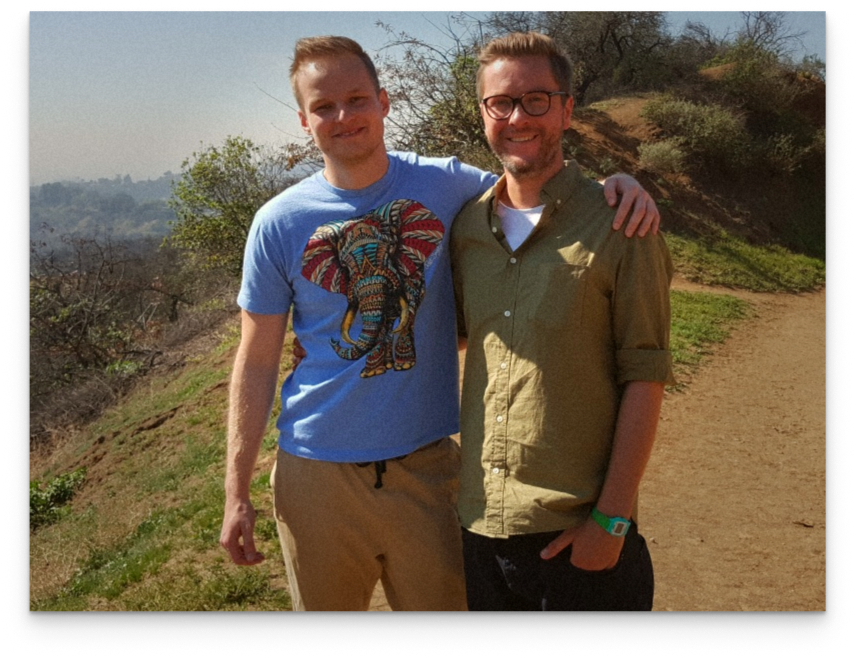
Two years in, a postdoc candidate came through Karol’s lab for an interview. He worked at Berkeley with BRETT (the Berkeley Robot for the Elimination of Tedious Tasks), a two-armed machine best known for folding towels at roughly twenty minutes a towel.
Cue cosmic intervention number two. Karol presented his work to the visitor, who listened to all of it and did not hold his tongue. Do a 180, the visitor told him: scrap two years of work and switch to an entirely different method called deep learning. Karol was unfazed. "I just thought to myself that he had no idea what he's talking about," he remembers, "and he probably didn't listen to me."
But Karol’s curiosity takes the lead, and that same afternoon he goes to hear the visitor’s lecture anyway. Somewhere in the middle of it, he thinks back to his ontology class in Warsaw, and "all this wonderful mess and chaos" that made him feel closer to how the world really is. The lecture gives him the same feeling. By the end, Karol has made up his mind to throw out two entire years of work. He starts working with the visitor, rebuilds his PhD around deep learning, and “never looked back.”
The visitor was Sergey Levine.
Betting on deep learning that early didn’t make our duo popular. The method had real problems back then: nobody could fully explain how the networks worked, and they needed enormous amounts of data. Machine learning conferences didn’t want robotics papers, and roboticists didn’t want neural networks. “We were a small group of renegades,” Karol says.
According to Karol, only one place really embraced their view: Google Brain. He applied for an internship there and got rejected. Twice. So he interned at DeepMind in London instead, and in 2018, straight out of his PhD, Google Brain finally let him join the ranks.
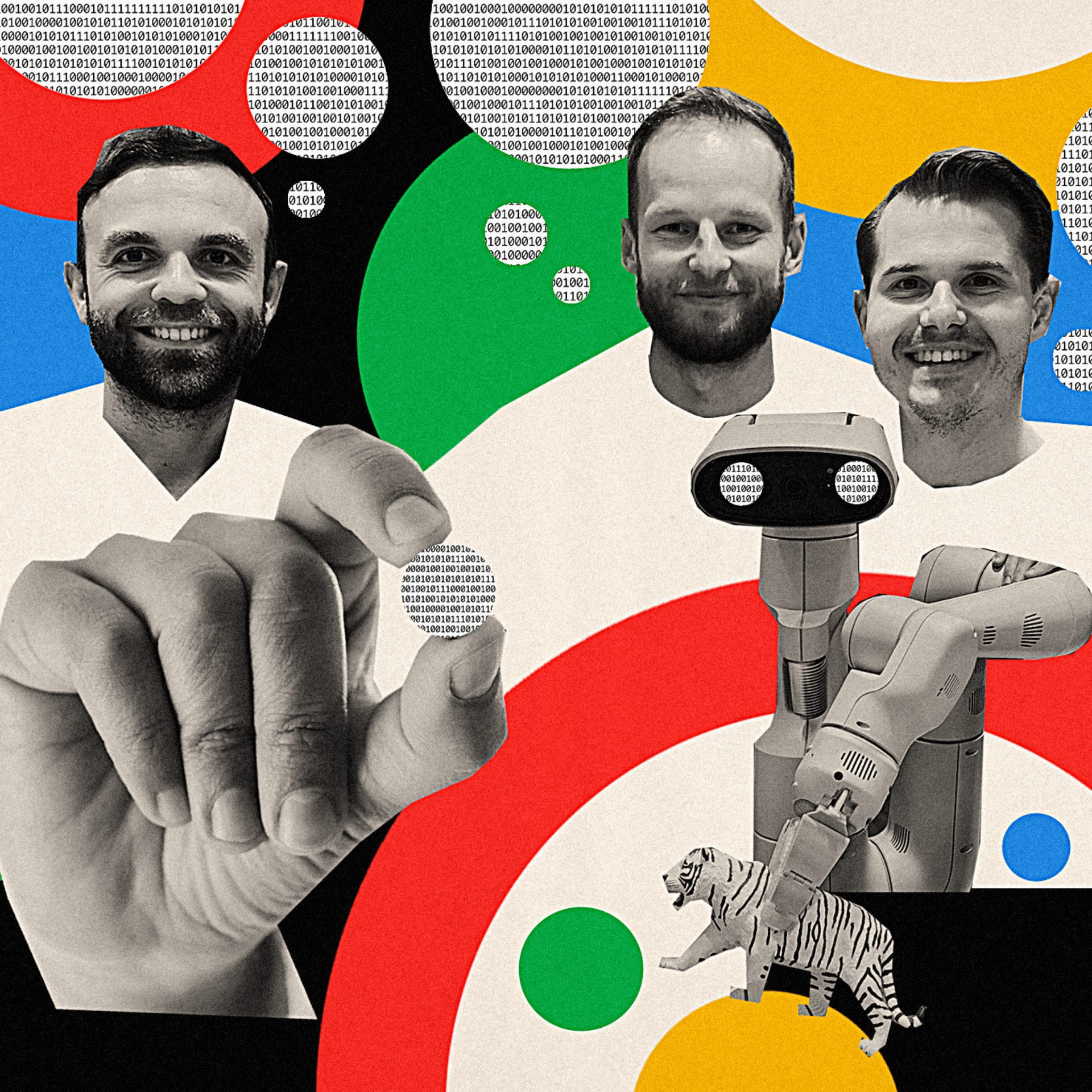
Karol spent the next six years proving the renegades right. He worked on RT-X, a project that asked 34 labs around the world for their latest robot datasets, trained one generalist model on all of them, and sent it back to each lab to compete against the specialist method that lab had built for its own robot. The generalist beat the specialists by more than 50% on average. For once, the results were adding up.
3.
When Karol started Pi, he split the long climb ahead into three camps, the way mountaineers split Everest.
The first camp was capability: could a robot do a hard task at all? Every robotics company starts with the same big decision: which task do you teach your robots first? The classic move had always been to pick the biggest market ready for automation (manufacturing, warehouses), move in, and master that one task. But Karol the Renegade thought this road was too slow: you have to learn a customer’s process, get on someone’s schedule, ship in their parts. Instead, he pointed his team at … folding laundry.
When they set the goal, he says, you could see the fear on people’s faces. “Laundry. That’s impossible.”
Laundry is brutally hard for a robot, because every shirt lands in a different shape, and one bad grab ruins every step after it.
“If you can fold laundry, you can probably assemble iPhones.” Karol Hausman
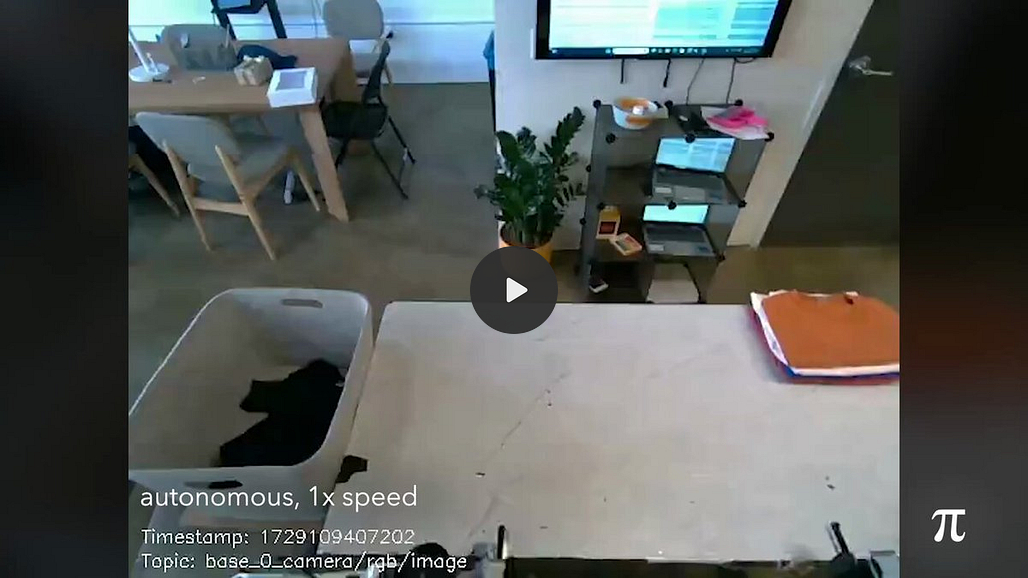
Karol had expected a good result to take three or four years.
Pi released π0 eight months in. It was one model running eight different kinds of robots, and it could fold laundry, clear tables, pack groceries and build boxes. The recipe was the one that made ChatGPT work: pre-train on a huge mix of data, about 10,000 hours of robots doing everything, then post-train on a small amount of excellent data, about 20 hours for a specific job.
Karol worries much less about a rival copying Pi than about nobody solving the problem at all, in which case keeping your model secret just gets you a fence around a desert. So he made the counterintuitive call to open-source π0. The weights and code went online as openpi, and within months, people had put π0 on surgical robots, cars and drones. One side effect: top researchers now want to work at the company whose model they already use.
The second camp was generalization: getting robots to work in places they have never seen before. Almost every robot video ever is shot in the room where its training data was collected, with the same light, the same table, the same objects. Move the robot to your laundry room at home, and it falls apart. When the Pi team started, they argued about how many homes a robot would need to see before it could handle a new one. A million? A billion? The answer, it turned out, was about one hundred.
In April 2025, the team rented a bunch of Airbnbs around San Francisco to train and test π0.5. In one video, a researcher asks a robot to clean a bedroom it has never been in. It puts the clothes away, drops the trash in the bin, and makes the bed. Nice!
After training in a hundred homes, a robot does about as well in the hundred-and-first as a robot trained in that exact home, with task progress above 80%. Karol called it “a plot that I’ve been waiting for for a very, very long time.” His theory about why: “Maybe the world is not as diverse as we thought.”
The third camp was performance: getting robots to do the job well, every single time. Nobody in robotics has made it there yet. In mid-2025, Karol said the models “still fail a lot. They’re more like demo ready than they are like actually deployment ready.”
To solve performance, Pi brought back an old friend: reinforcement learning, where the robot tries, gets feedback on whether it succeeded, and does more of what works. It had never worked at scale on real robots, because a robot starting from zero almost never succeeds by accident.
In November 2025, π*0.6 folded laundry for four hours straight. It also made espresso on a commercial machine for thirteen hours, cleaning up after itself, with no cuts (a miracle! a scientific breakthrough!). Early on, it tamped the coffee so hard it almost lifted itself off the table (lol). But roughly fifty small human corrections taught it to be gentle.
To date, performance has been the hardest part. Language models have a scaling law: add more data and computing power, and the model gets better by a relatively predictable amount. That predictability is a big reason investors were willing to spend billions on each new model. Robotics has no such rule yet, partly because nobody agrees on what “better” should even be measured in: success rate, speed, the number of tasks? “We don’t even know what the Y-axis of that scaling law should be,” Karol admits.
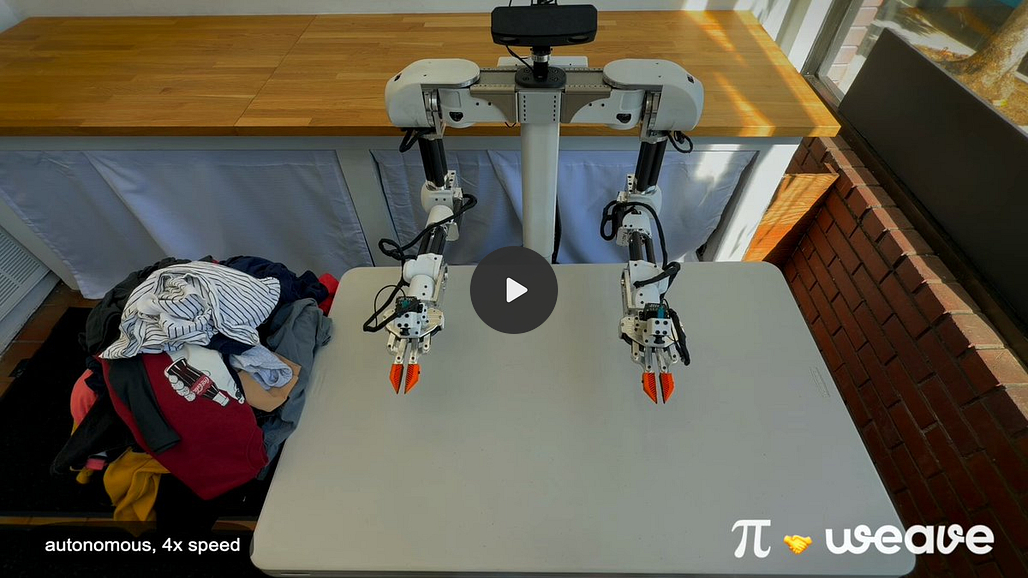
The espresso and laundry experiments showed that Pi’s models could perform for hours without falling apart. The next test was harder: could that reliability survive outside the lab? Karol had guessed it would take the company five years to get its first real ‘paying gig.’ It took 18 months. Dandelion Chocolate in San Francisco hired Pi’s robots to fold the cardboard boxes its chocolate ships in, and two more companies have ‘hired’ them since. At Weave, which folds laundry in homes and laundromats across the Bay Area, Pi’s model cut human interventions per laundry load by half. At Ultra’s warehouse, Pi packs real e-commerce orders, and ran a full shift at 96.4% autonomy.

Philip Clark at Thrive, who backed Pi from its seed round, has been surprised by the pace too. “We’re probably today 18 months into the company where I thought we would be 3 or 4 or 5 years into the company,” he says. “They’ve moved something like two to three times faster on that front than I would have thought possible in my more optimistic expectations.”
Pi hasn’t reached the summit yet - not even close. But by Karol’s own account, it has passed the milestone that matters most: its models are good enough to earn money doing real work, and every robot on a deployment sends back data that makes the next one better, at a cost he calls “basically negative”. On October 13 2026, Pi opened its models to outside robotics teams, whose machines already harvest strawberries and assemble servers. Starting a robotics company should be much easier than it is today,” Karol wrote that day.
The view from here is better than anyone at Pi expected, but it also shows how much is left to climb. Sergey Levine has a line for this, and he credits it to Karol: only from the top of one mountain can you see how high the next one really is.
4.
At Pi, they let science lead the way.
It shows in how Pi works, starting with who gets hired. Karol hires people “who can take new evidence and change their opinions,” and who will try an idea even when they don’t believe in it. People, in other words, a lot like him. From the inside, Lachy found that this looked very different from the academic culture he had imagined.
“The researchers and engineers here feel surprisingly close to the engineers that I worked with at Stripe. There is an obsessiveness and obsession with the end goal and getting there as quickly as possible.” Lachy Groom
He describes Pi as having “a real intensity to the culture,” along with “a desire to search for truth” and “an ambition.” Whatever conception he had of working in a research organization, he says, “was largely wrong.”
The team at Pi runs a lot of experiments, tries many ideas, and doubles down on whichever ones stick, whoever came up with them. Sometimes that means dropping Pi’s own plans, sometimes ignoring the rest of the field. Originally, the company planned to buy all its hardware; now builds more and more of it in-house. Many roboticists consider touch sensors essential for handling anything delicate. Pi decided they were too fragile and expensive, and put small cameras on the robots’ wrists instead. Same thing for simulation: most robotics teams train their robots in virtual worlds, because it’s faster than using real machines. Pi learns from the real world, and mostly uses simulation for tests. If simulation ever becomes the better teacher, Karol says, “we’ll switch everything.”
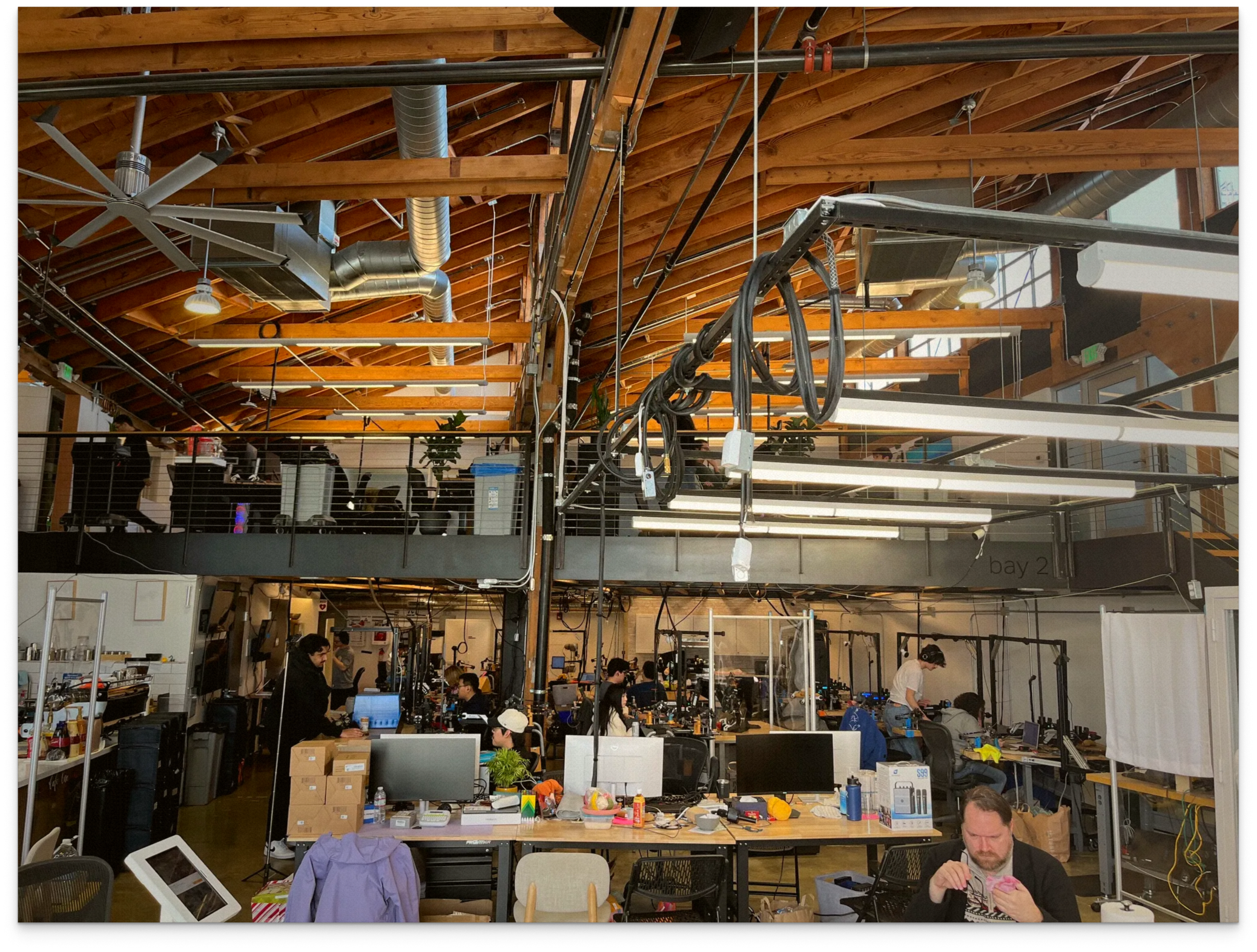
All of this leaves Karol with a tough call: which problems deserve the time, money, people and robots? "It's hard work," he says. In research, he believes, the real failure is choosing badly:
"A research failure is not a matter of failing to solve a problem, but rather that you picked the wrong problem to solve." Karol Hausman
His second, unofficial job is to plan for a future in which science has led the way, Pi has won the game, and true physical intelligence is part of our reality. Karol Hausman has been at it since he was a kid watching Star Wars on repeat.
In 2016, the Koszalin news site asked him whether his work could one day lead to a Terminator scenario. He wasn’t worried then. True artificial intelligence was still “very far” away, he said. A computer could beat a human at one specific task, but that wasn’t even a tiny part of the general intelligence of an average two-year-old. “I’m not afraid, rather I’m full of hope.” Robotics, he believed, could completely change the way we live, and if it did, he wanted to add “at least a small brick” (małą cegiełkę) to making that change a good one.
Ten years later, Karol has laid brick upon brick and is still full of hope. “Right now the only unit of labor we know is a human” he says. “But imagine when that’s not the case and labor is just freely available to anyone.” With populations aging, he sees it as the only way to care for the elderly and keep economies running.
He is also worried, as anyone sensible would be. He’s uneasy about the “accumulation of power, the change being too rapid, how we’re going to deal with this as a society.” In 2016, true AI was “very far” away. Now, “I don’t think many people realize how fast this is coming.”
Last year, with a one-year-old daughter at home, Karol wanted a robot for the bottles, the dishwasher, the cleaning, “just to spend more time with her.” An interviewer asked whether she would get a chores list when she’s older. “That’s a good point,” Karol said. “I need to think about that.”
5.
In December 2023, a few months before Physical Intelligence came out of stealth, Karol took the time to finish The Worlds I See, Fei-Fei Li’s memoir. She arrived in New Jersey from China as a teenager with less than $20, worked in restaurants and in her parents’ dry-cleaning shop, and went on to build ImageNet, the giant photo dataset that helped set off the deep learning boom. (The same boom, a few years later, sent Karol the Renegade on a 180.)
The book brought back feelings he had long forgotten, he wrote when he finished it: “immigration, feeling lost and lonely, passion for physics, appreciation for teachers who believed in me from a young age, thoughtful mentors and guides who were gracious with their time and wisdom, falling in love with a discipline that I didn’t know much about.”
“It was a long journey from Poland through Germany to the US,” he says, “and at every single stage of the journey there was someone kind of rooting for me and helping me.” You’ve met a few of them already: the friends he followed to Warsaw, the lab in Munich that hired a student who didn’t know Linux, and the Berkeley visitor who told him to scrap two years of work and start over.
So he wrote to some of them, to thank them “for everything they did for me.”
A few months later, Karol would leave Google to start Pi.